What Is Sex Therapy? A Clinical Approach to Healing Sexuality and Intimacy
HappyWaves Team
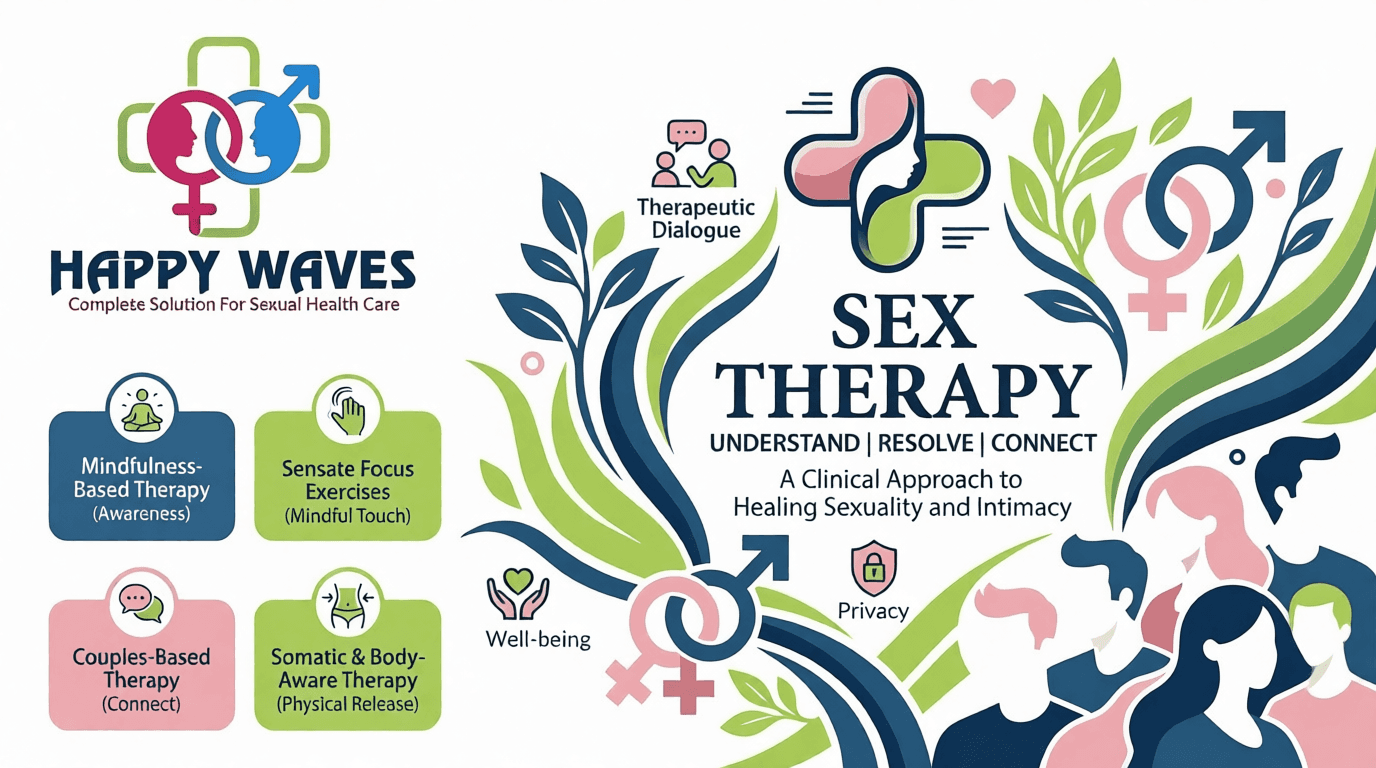
Most people have heard the term "sex therapy" but very few understand what it actually involves. The name alone is enough to make some people uncomfortable. Images of awkward conversations, clinical settings, or something far more invasive than it actually is tend to come to mind. The result? Thousands of people who could genuinely benefit from sex therapy never seek it and continue carrying the weight of sexual concerns, relationship distance, and quiet frustration entirely on their own.
Sex therapy is a type of talk therapy designed to help individuals and couples address issues impacting their sexual satisfaction, intimacy, and romantic relationships. Pioneered in the 1960s by researchers William Masters and Virginia Johnson, it has evolved into an evidence-based practice that combines psychological insights with practical exercises.
In India, where conversations about sexual health are still largely avoided, sex therapy represents something genuinely important: a professional, ethical, and scientifically grounded path through some of the most personal challenges people face.
What Is Sex Therapy?
Sex therapy meaning: Sex therapy is a specialised form of psychotherapy focused on sexual health addressing conditions and concerns that affect a person's sexual functioning, desire, identity, or intimate relationships.
Featured Snippet Definition: Sex therapy is a structured, talk-based form of therapy conducted by a qualified sexologist or sex therapist that helps individuals and couples understand and resolve sexual concerns including performance anxiety, low desire, erectile dysfunction, vaginismus, and intimacy difficulties. Sessions are verbal only. There is no physical examination or sexual activity involved.
Sex therapy has existed in different forms across cultures for centuries. It has a history in ancient India, China, Greece, and Rome taking the form of manuals, aphrodisiacs, and tantric yoga, among others. Modern sex therapy as a clinical practice was formalised by Masters and Johnson in the mid-20th century and has since become one of the most evidence-backed approaches in sexual health worldwide.
What Is Sex Therapy Meant to Achieve?
A common misconception is that the goal of sex therapy is simply to "fix" sexual performance. It's far more nuanced than that.
The actual goals of sex therapy, depending on the individual or couple, include:
-
Reducing performance anxiety Breaking the fear-failure cycle that drives most psychological sexual dysfunction
-
Improving communication Helping partners express needs, boundaries, and desires clearly and comfortably
-
Rebuilding intimacy and connection Particularly after trauma, illness, childbirth, or prolonged disconnection
-
Addressing harmful beliefs For some individuals, inappropriate sexual beliefs or myths arising from cultural beliefs, lack of education, or religious systems can cause significant problems within a relationship. One component of sex therapy is helping individuals and their partners alter sexual beliefs that interfere with the enjoyment of sex.
-
Treating specific sexual dysfunctions ED, premature ejaculation, vaginismus, low desire, delayed ejaculation, anorgasmia
-
Rebuilding a positive relationship with one's body Particularly important after trauma, surgery, or body image struggles
-
Deepening sexual satisfaction Not just for people in crisis, but for those who simply want more from their intimate lives
Types of Sex Therapy Which Approach Is Right for You?
Here are the main types used by qualified sex therapists today:
1. Cognitive Behavioural Sex Therapy (CB-ST)
Cognitive behavioural therapy helps reframe negative thoughts, reduce performance anxiety, and build confidence in sexual experiences.
This is one of the most widely used and clinically validated approaches. It works by identifying the thought patterns of fear, shame, catastrophising, self-criticism that interfere with sexual function, and systematically replacing them with more accurate, helpful ways of thinking.
Particularly effective for: performance anxiety, erectile dysfunction, premature ejaculation, and sexual shame rooted in cultural or religious conditioning.
2. Sensate Focus Therapy
Developed by Masters and Johnson themselves, sensate focus is a structured series of touching exercises done alone or with a partner that deliberately remove performance pressure and redirect attention to present-moment sensation.
It works because sexual arousal requires the parasympathetic nervous system, the body's "rest and connect" state. When anxiety is removed through gradual, non-goal-oriented touch, the body's natural sexual response returns.
Read our complete guide to sensate focus therapy →
Particularly effective for: erectile dysfunction, vaginismus, premature ejaculation, low desire, and intimacy avoidance.
3. Mindfulness-Based Sex Therapy
Mindfulness therapy has been introduced as a new method and has proved to be effective in sexual dysfunction.Mindfulness-based sex therapy teaches patients to bring non-judgmental, present-moment awareness to sexual experiences reducing the anxious self-monitoring that interrupts natural arousal.
Particularly effective for: performance anxiety, delayed ejaculation, women's arousal difficulties, and sexual dissatisfaction.
4. Psychodynamic Sex Therapy
This approach explores how past experiences in childhood, early relationships, trauma, cultural messaging have shaped current sexual patterns and responses. It's particularly valuable when the roots of a sexual concern lie in experiences the patient may not have consciously connected to their present difficulties.
Particularly effective for: sexual trauma recovery, relationship concerns, and long-standing sexual shame.
5. Couples-Based Sex Therapy
Couples-based sex therapy focuses on how relationship patterns affect intimacy, improving communication and connection between partners. It addresses the relational system not just one individual understanding that sexual concerns almost always affect both partners.
Particularly effective for: mismatched desire, intimacy avoidance, communication breakdown, and bonding through sex therapy after a period of disconnection.
6. Somatic and Body-Aware Therapy
Somatic therapy uses body-awareness and relaxation techniques to ease tension, improve arousal, and reduce pain during sex.This is particularly relevant for vaginismus, sexual pain disorders, and trauma-related concerns where the body holds the distress physically.
Particularly effective for: vaginismus, sexual pain, and trauma recovery.
How Does Sex Therapy Work?
This is one of the most searched questions and one that makes many people hesitate to book their first appointment. Here is exactly how sex therapy works in practice.
First session Assessment and goal-setting Your therapist conducts a thorough assessment: your sexual and relationship history, your current concerns, physical health, medications, and what you hope to achieve. There is no physical examination. This is a conversation held in a private, confidential space.
Ongoing sessions Psychoeducation and pattern work Understanding and clarifying sexual myths is a key early component of sex therapy. For some individuals, inappropriate sexual beliefs can cause problems within a relationship and one of the goals of therapy is to help individuals and their partners alter any sexual beliefs that interfere with the enjoyment of sex.
Between sessions Homework exercises Unlike general counselling, sex therapy often involves structured exercises to practice between sessions. These are carefully graded to your comfort level and always completely consensual. They might include:
-
Sensate focus touch exercises (solo or with partner)
-
Mindfulness practices around bodily awareness
-
Communication exercises with your partner
-
Journalling and reflection tasks
-
Specific techniques for conditions like PE or vaginismus
Factors associated with positive treatment outcomes in sex therapy include the motivation for success of the partners, relationship satisfaction, and compliance with homework assignments.
Progress and adjustment The follow-up plan is tailor-made for the individual there is no single follow-up regime. Regular follow-up at four weeks for six months is usually recommended. Your therapist tracks progress, adjusts techniques as needed, and provides ongoing support throughout.
Sex Therapy for Erectile Dysfunction Does It Actually Work?
Yes and for a significant proportion of men with ED, sex therapy is not just helpful but essential.
Studies from the Journal of Sexual Medicine indicate that sex therapy can improve sexual function in 75–80% of cases by addressing root causes like anxiety, stress, or past trauma.
This matters particularly for ED because the majority of cases especially in men under 50 have a significant psychological component. Performance-focused physicians could be missing the underlying fear and distress about interpersonal sexuality that is implied in treatment approaches for ED. A focus on distress components, in addition to performance components, gives better treatment outcomes.
What this means in practice: a pill can temporarily support an erection, but it doesn't address the performance anxiety, shame, or relationship tension that is causing and maintaining the ED. Sex therapy addresses those root causes producing lasting improvement rather than session-by-session relief.
At Happy Waves, our sexologists use an integrated approach to erectile dysfunction combining medical assessment, sex therapy techniques, and sensate focus exercises into a personalized plan. Explore ED treatment at Happy Waves
Common Sex Therapy Exercises
Sex therapy exercises are carefully structured, completely consensual, and always appropriate to your current comfort level. Here are the most commonly used:
Sensate Focus Exercises
Progressive touching exercises beginning with non-sexual body exploration and gradually expanding that rebuild a relaxed, present relationship with physical intimacy.
The Stop-Start Technique
Used for premature ejaculation involves pausing stimulation just before ejaculation to train ejaculatory control over time. Practised solo initially, then with a partner.
The Pause-Squeeze Technique
A variation for PE applies brief, firm pressure to the tip of the penis when close to ejaculation to delay the reflex. Used alongside the stop-start method for sustained improvement.
Pelvic Floor Exercises
Relevant for both premature ejaculation and vaginismus strengthening and releasing pelvic floor muscles to improve ejaculatory control and reduce involuntary vaginal muscle spasm.
Mindful Body Scan
A solo practice lying still and bringing focused, non-judgmental awareness through every part of the body. Rebuilds body awareness and reduces the anxious disconnection that drives many sexual difficulties.
Communication Exercises for Couples
Structured conversation exercises often using prompts provided by the therapist that help partners discuss sexual needs, boundaries, and feelings in a safe, guided way. Particularly transformative for relationship intimacy concerns.
Benefits of Sex Therapy
The benefits of sex therapy extend well beyond the bedroom. Here is what consistent, well-guided sex therapy actually produces:
-
Resolution of specific sexual dysfunctions ED, PE, vaginismus, delayed ejaculation, anorgasmia
-
Reduced performance anxiety One of the most consistent and significant outcomes
-
Improved communication in relationships Partners learn to discuss sexual needs without conflict or shame
-
Increased sexual confidence Particularly profound for men and women who have spent years feeling broken or inadequate
-
Deeper emotional intimacy Bonding through sex therapy is real; working through vulnerability together strengthens relationships
-
Recovery from sexual trauma Sex therapy supports survivors of trauma in a safe, sensitive way, addressing both emotional scars and intimacy fears.
-
Better overall mental health Sexual wellbeing and psychological wellbeing are deeply interconnected; improving one consistently improves the other
-
Sustainable results Unlike medication alone, therapy addresses root causes and produces changes that last
Common Myths About Sex Therapy
Despite decades of clinical evidence, sex therapy is still surrounded by myths that prevent people from seeking help. Here are the most common and the truth behind each:
Myth 1: "Sex therapy involves physical contact or sexual activity." False. Sex therapy is entirely talk-based. Sessions take place in a standard therapy room or online. There is no physical examination, no touch, and no sexual activity of any kind between therapist and patient.
Myth 2: "Only couples need sex therapy." Not at all. Sex therapy is equally valuable for individuals addressing personal concerns like body image, sexual anxiety, trauma recovery, or low desire without a partner being involved at all.
Myth 3: "Sex therapy is only for people with serious problems." Sex therapy is also sought by people who simply want to deepen intimacy, improve communication with a partner, or explore their sexuality in a guided, supportive environment. You don't need to be in crisis to benefit.
Myth 4: "It's too embarrassing to discuss." A qualified sex therapist has heard every concern imaginable without judgment. Their entire professional purpose is to make this conversation as comfortable and productive as possible.
Myth 5: "Medication is enough, I don't need therapy." The existing pharmacological agents have certain limitations, and non-pharmacological interventions still remain relevant for a significant number of clinical situations in sexual medicine.Medication addresses symptoms. Therapy addresses causes. The two work best together.
How Sex Therapy Works for Couples
When both partners engage with sex therapy together, something remarkable often happens: the relationship deepens in ways that go far beyond what either expected.
Working through vulnerability together discussing fears, desires, and experiences that have never been said out loud creates a level of emotional intimacy that transforms the relationship as a whole.
Treating the contextual and relationship issues that inevitably accompany sexual problems is crucial, particularly for long-term improvement.
At HappyWaves.in, our couples-based sex therapy integrates communication coaching, sensate focus exercises, and relational counselling into a coherent programme that supports both partners, not just the one presenting the concern.
Do I Need Sex Therapy?
You might benefit from sex therapy if any of the following have been present for three months or more:
Physical and functional signs:
-
Consistent difficulty with erection, ejaculation, or arousal
-
Pain during or after sexual activity
-
Complete inability to achieve orgasm despite wanting to
-
Significant avoidance of all sexual activity
Emotional and psychological signs:
-
Persistent anxiety or dread before sexual encounters
-
Shame or guilt around sexual desires or experiences
-
Low or absent sexual desire that is causing distress
-
Feeling disconnected from your body during intimacy
Relational signs:
-
Growing emotional distance linked to sexual difficulties
-
Inability to discuss sexual concerns with your partner
-
One or both partners feeling consistently unsatisfied
-
Intimacy avoidance that is affecting the relationship
Specific conditions that respond particularly well to sex therapy:
→ Erectile dysfunction → Premature ejaculation → Delayed ejaculation → Vaginismus → Sexual concerns and anxiety → Relationship intimacy difficulties
A patient-centred framework is required for better evaluation and management of sexual problems. Principles of evidence-based medicine should be followed in both men and women in diagnostic and treatment planning.
What Can I Expect in Sex Therapy at Happy Waves?
At Happy Waves, sex therapy is delivered by qualified sexologists and sexual health specialists trained in the specific approaches that evidence shows work. Here is what your experience looks like:
A private, comfortable space whether online from home or in-clinic at a Happy Waves centre near you.
A thorough first assessment, no rushed prescriptions, no generic advice. Your therapist takes time to understand your specific situation before recommending any approach.
A personalised treatment plan combining the most appropriate techniques for your concern, your personality, and your relationship context.
Structured exercises between sessions carefully graded to your comfort level, with clear guidance on how to practice them.
Regular progress reviews your therapist adjusts the approach based on what's working and what needs refinement.
Complete confidentiality every session, every detail, fully protected.
Happy Waves provides sex therapy in-clinic and online across India. If you're in Delhi, Bangalore, Mumbai, Kolkata, Hyderabad, Chennai or anywhere else in India, expert sexual health support is accessible.
Book a confidential sex therapy consultation at happywaves.in
How Much Is Sex Therapy?
Sex therapy costs in India vary depending on the specialist, location, and format:
|
Format |
Approximate Cost Per Session |
|
Online sex therapy consultation |
₹500 – ₹1,500 |
|
In-clinic sexologist consultation |
₹800 – ₹2,000 |
|
Structured sex therapy programme (6–8 sessions) |
₹5,000 – ₹15,000 |
|
Couples sex therapy session |
₹1,000 – ₹2,500 |
Important context: Sex therapy is not a one-session fix. Meaningful improvement typically comes from 6–12 structured sessions, depending on the complexity of the concern. The investment is significant but so is the return. The confidence, relationship quality, and mental wellbeing that improve through effective sex therapy affect every area of life.
At Happy Waves, we offer transparent, competitive pricing for sex therapy consultations. Contact us for current fees and package options.
Conclusion
Sex therapy is not a last resort. It is not for people who have exhausted every other option. It is a first-line, evidence-based, deeply human approach to some of the most personal challenges a person can face.
If you're dealing with erectile dysfunction, premature ejaculation, vaginismus, delayed ejaculation, a loss of intimacy in your relationship, or simply a sense that something important is missing from your sexual life sex therapy offers a genuine path forward.
At Happy Waves, our experienced sexologists provide personalised, confidential, and clinically grounded sex therapy for individuals and couples, online and in-clinic, across all of India.
Ready to Begin?
Book a Confidential Sex Therapy Consultation at happywaves.in
Available online across India. In-clinic in Delhi, Bangalore, Hyderabad, Kolkata & more.
Same-week appointments. Complete confidentiality. Expert, compassionate care.
Your sexual health is worth the same attention as every other part of your wellbeing.
Free Consultation
Concerned about your sexual health?
Speak to a certified sexologist — 100% confidential, no judgement. Same-day slots available.