Why Do I Have a Low Sex Drive? Complete Causes & How to Increase Libido in Men and Women
HappyWaves Team
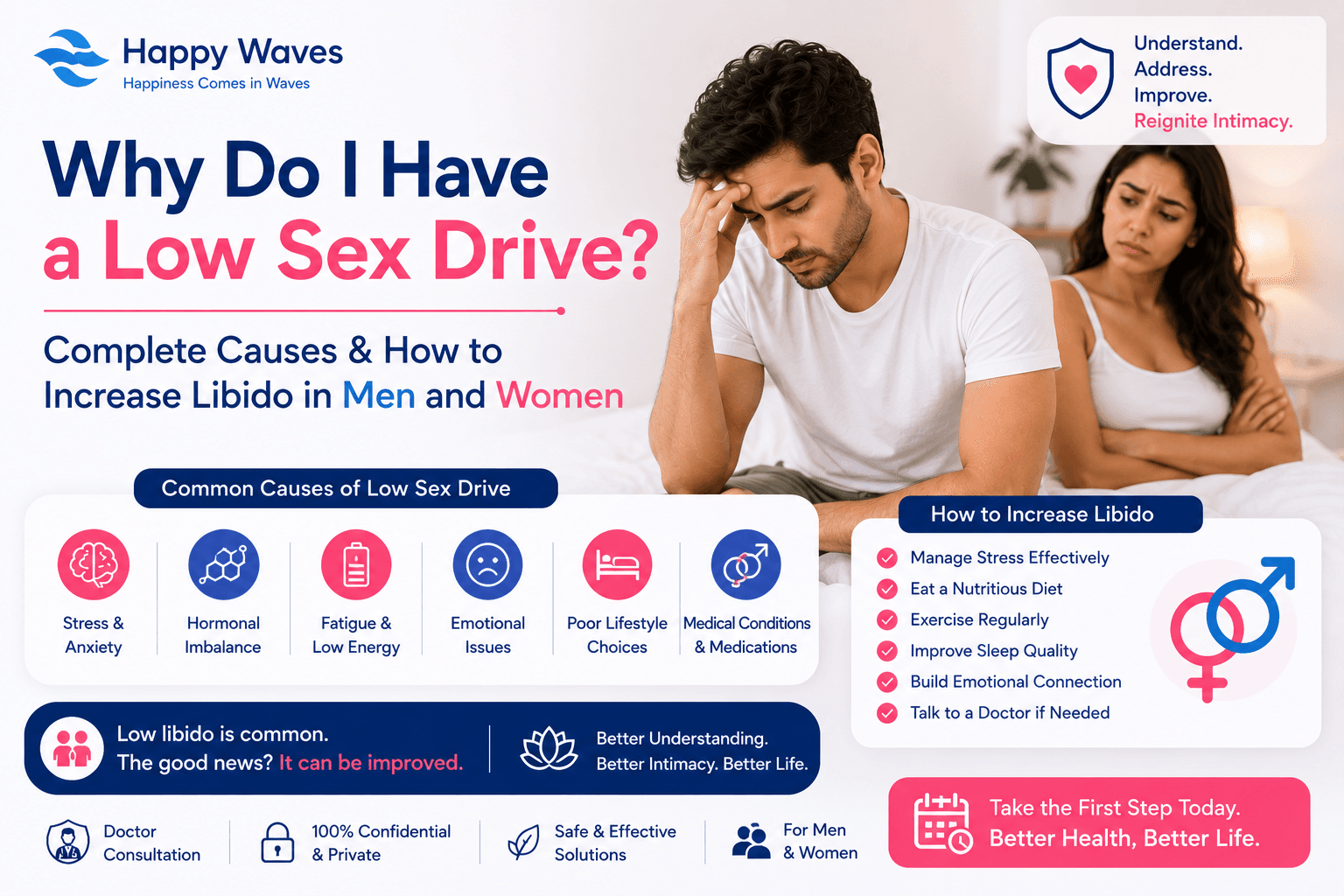
It creeps up quietly. One week you're less interested than usual. A month later you realise you haven't thought about sex in a while. Six months in, your partner notices. And you find yourself wondering what happened to my sex drive?
Low sex drive is one of the most common sexual health concerns in India and one of the least acknowledged. Men feel ashamed to admit it because it conflicts with expectations of constant male desire. Women often don't even recognise it as a problem because cultural messaging has told them for years that not wanting sex is normal and appropriate.
The desire for sex is based on a complex interaction of many things that affect intimacy including physical and emotional wellbeing, experiences, beliefs, lifestyle, and relationship status. Low sex drive is rarely caused by one single thing and it almost always has an identifiable cause that can be addressed.
This guide covers what libido actually means, why sex drive decreases, how to increase male and female libido naturally, and when professional support from a qualified sexologist makes the decisive difference.
What Is Libido?
Before addressing low sex drive, it helps to understand what libido actually is.
Libido Definition:
Libido is the medical and psychological term for sexual desire a person's interest in, motivation for, and drive toward sexual activity. Libido varies naturally between individuals, fluctuates across a lifetime, and is influenced by hormones, physical health, mental health, relationship quality, and lifestyle. There is no universally "correct" level of libido what matters is whether your current level feels right for you and is not causing distress.
The term "libido" was first used in its modern psychological sense by Sigmund Freud to describe psychosexual energy and drive. Today it is used clinically to refer specifically to sexual desire distinct from sexual function (the ability to perform sexually) and sexual satisfaction (the quality of the sexual experience).
Libido is driven primarily by:
-
Testosterone - The primary hormonal driver of sexual desire in both men and women
-
Oestrogen - Influences sexual desire, comfort, and arousal in women
-
Dopamine - The brain's reward and motivation neurotransmitter; drives the desire to seek pleasurable experiences including sex
-
Serotonin - In balance, supports mood and wellbeing; elevated serotonin (as with SSRIs) suppresses libido
-
Oxytocin - The bonding hormone; deepens desire within emotionally close relationships
What Is a Normal Sex Drive?
One of the most important things to understand about libido is that there is no universal "normal."
Sexual desire varies enormously between individuals and across different stages of life. What feels right for one person may be very different from what feels right for another and both can be completely normal.
Low sex drive becomes a clinical concern technically called Hypoactive Sexual Desire Disorder (HSDD) when it is the persistent or recurrent deficiency or absence of sexual desire and causes significant distress or relationship problems. The distress component is important: a naturally lower libido that both partners are comfortable with is not a disorder.
Why Do I Have a Low Sex Drive?
Hormonal Imbalances - Physical Cause
In men:
Low testosterone is the most commonly identified hormonal cause of reduced sex drive in men. Testosterone levels naturally decline from the mid-30s but significant drops can occur much earlier due to obesity, chronic stress, poor sleep, or medical conditions.
Low sexual desire is one of the most common symptoms of low testosterone often accompanied by fatigue, reduced muscle mass, mood changes, and erection difficulties. A simple blood test identifies testosterone levels, and treatment when appropriate produces significant improvement.
Other hormonal causes in men include elevated prolactin (a pituitary hormone that suppresses testosterone production) and thyroid dysfunction both of which are easily identified through blood work.
In women:
Oestrogen levels drop during menopause and can greatly affect libido. It can also cause vaginal dryness and lead to painful or uncomfortable sex which then creates a further reduction in desire due to anticipating discomfort.
Hormonal changes after childbirth, during breastfeeding, and as a result of hormonal contraceptives can all reduce female libido. These are not permanent changes but they deserve professional attention and management rather than silent acceptance.
Medications That Suppress Sex Drive
Many medications used for anxiety and depression can lower libido in men and women, and in some cases delay or prevent orgasm. This is one of the most commonly missed causes of low sex drive because patients are not warned about this side effect and doctors rarely ask about it.
Common medications associated with reduced libido include:
-
SSRIs and SNRIs (antidepressants) - Among the most significant libido suppressors; affect serotonin pathways that regulate sexual desire
-
Beta-blockers and diuretics - Blood pressure medications that frequently reduce sexual desire and function
-
Hormonal contraceptives - Can suppress testosterone and reduce libido in some women
-
5-alpha reductase inhibitors - Used for prostate conditions; affect testosterone metabolism
-
Antihistamines - Reduce arousal through anticholinergic effects
This is not a reason to stop any prescribed medication. But it is absolutely a conversation worth having with a sexologist or prescribing doctor because alternatives or dosage adjustments can often resolve the problem.
Stress and Mental Health
Stress is one of the single biggest suppressors of sexual desire and in India's high-pressure professional environment, it is among the most prevalent contributors to low libido among working-age adults.
Chronic stress elevates cortisol, the body primary stress hormone. Elevated cortisol directly suppresses testosterone production, reduces dopamine activity, and keeps the nervous system in a state of vigilance that is fundamentally incompatible with sexual desire.
Depression reduces motivation, energy, and pleasure-seeking across every area of life and sexual desire is no exception. Anxiety creates a mental preoccupation that leaves no space for sexual interest. Both conditions are also commonly treated with medications (SSRIs) that further suppress libido creating a compound effect that can be significant.
Relationship Problems
For many people, particularly women, emotional closeness is essential for sexual desire. Problems in the relationship like lack of connection, unresolved conflicts, or trust issues can be a major contributor to a low sex drive.
Unresolved anger, criticism, emotional withdrawal, or a pervasive sense of disconnection from a partner directly suppresses libido at a neurological level. This is not a choice, it is physiology. The brain's arousal circuits require emotional safety to activate fully.
Men often experience relationship-driven low libido differently as reduced initiation, increased avoidance, or a quiet withdrawal from intimacy rather than the explicit emotional processing that women more commonly describe.
Poor Lifestyle Habits - Diet, Sleep, Exercise, and Alcohol
The physical foundations of health directly govern libido:
Poor sleep - Testosterone production happens almost entirely during deep sleep. Consistently sleeping fewer than 6 hours reduces testosterone levels measurably. Sleep deprivation also increases cortisol, compounds stress, and reduces energy all of which suppress desire.
Physical inactivity - Sedentary lifestyle reduces cardiovascular fitness, testosterone, and the body confidence that supports sexual desire. Regular exercise consistently improves libido in both men and women.
Excess alcohol - Increased alcohol use can reduce testosterone levels and increase the risk of erectile dysfunction and low libido. What many men use to lower inhibitions before sex is, ironically, one of the most reliable libido suppressors available.
Poor diet - Processed foods, excess sugar, and trans fats impair hormone production and cardiovascular health both of which directly affect libido.
Weight gain - Weight gain can lead to low energy, negative self-image, and reduced testosterone in men all contributing to lower sexual desire. After growing their families, many women are exhausted and haven't exercised in months. They describe feeling sexually disconnected from themselves entirely.
Age-Related Changes
Both men and women experience natural age-related changes in sexual desire. These are not inevitable in the sense of being irreversible, but they do require acknowledgement and where they cause distress, active management.
In men, testosterone declines gradually from the mid-30s. In women, oestrogen declines during perimenopause and menopause, often producing a significant reduction in desire alongside vaginal dryness and discomfort.
Age-related changes in libido are very manageable with appropriate hormonal assessment, lifestyle support, and where needed hormone therapy or sexual health intervention.
Chronic Health Conditions
Several medical conditions directly reduce sexual desire:
-
Diabetes - Affects hormone levels, blood flow, and nerve function; all three pathways reduce libido
-
Cardiovascular disease - Poor circulation reduces blood flow to sexual organs and general energy
-
Thyroid dysfunction - Both hypothyroidism and hyperthyroidism affect hormone production and energy
-
Chronic pain conditions - Pain itself reduces desire; medications used to manage pain also suppress libido
-
Obesity - Reduces testosterone in men, disrupts hormonal balance in women, and reduces body confidence in both
Low Sex Drive in Women
Women's low libido is more complex, with causes ranging from past negative and abusive experiences with sex to fatigue and stress. Yet it is consistently underdiagnosed because women in India are less likely to raise it with a doctor, and doctors are less likely to ask about it.
The most important thing to understand about low libido in women is that it is frequently multifactorial meaning several causes work together, each amplifying the others:
-
Hormonal changes from contraceptives reducing desire
-
Sleep deprivation from childcare and work reducing energy
-
Relationship emotional distance reducing motivation
-
Body image concerns following pregnancy reducing confidence
-
Past trauma creating unconscious avoidance
Each of these alone is manageable. Together they can create a significant and sustained reduction in sexual desire that genuinely requires professional support to unravel and address. Women who have been abused often avoid sexual contact because their brains associate sex with fear or pain making trauma-informed therapeutic support essential.
How to Increase Sex Drive in Men
Exercise Consistently
Regular aerobic exercise and strength training can increase your stamina, improve your body image, lift your mood, and boost your libido. Exercise boosts testosterone, reduces cortisol, improves cardiovascular health, and builds the body confidence that supports desire. Even 30 minutes of moderate cardio daily produces measurable improvement in libido within 4–6 weeks.
Improve Sleep Quality
Prioritise 7–9 hours of quality sleep per night. Testosterone production happens almost entirely during deep sleep. Improving sleep hygiene, consistent bedtime, dark and cool room, no screens before sleep is one of the simplest and most effective libido interventions available.
Reduce Alcohol and Stop Smoking
Alcohol and smoking both suppress testosterone and reduce vascular health two direct pathways to reduced libido. Reducing or eliminating both consistently improves desire within weeks.
Manage Stress Proactively
Find ways to better cope with work and home stress. Meditation, yoga, pranayama, and structured relaxation all reduce cortisol and directly improve libido. Seeking out ways to reduce stress in daily life is one of the most consistently effective natural libido interventions.
Communicate With Your Partner
Something as simple as meaningful conversation, quality time together, and emotional reconnection can do wonders for sexual desire. For many couples, low libido is substantially a communication and connection problem not a hormonal one. Plan dedicated time together. Reconnect emotionally before expecting a desire to return physically.
Ayurvedic Support for Male Libido
India's traditional medicine has several well-researched herbs that support male libido naturally:
-
Ashwagandha Reduces cortisol, supports testosterone, and improves sexual stamina; one of the most researched herbs for male libido
-
Shilajit - Supports testosterone production and sexual energy
-
Safed Musli - Traditional aphrodisiac supporting vitality and desire
-
Kaunch Beej (Mucuna pruriens) - Supports dopamine the brain's desire neurotransmitter directly improving motivation for intimacy
-
Gokshura - Supports testosterone and libido in men
Always consult a qualified Ayurvedic practitioner before beginning any herbal protocol.
How to Increase Female Libido
-
Hormonal assessment - If menopause, post-partum changes, or contraceptive effects are contributing, targeted hormonal management produces significant improvement
-
Address relationship emotional safety - For many women, emotional closeness is the most direct pathway to desire; couples communication coaching helps rebuild this
-
Treat painful intercourse - If pain is making sex unappealing, treating the underlying cause (vaginismus, dryness, hormonal atrophy) removes the barrier to desire. Read our vaginismus guide →
-
Manage stress and improve sleep - The same fundamentals that help men help women
-
Sex therapy Particularly valuable for women whose low libido has psychological, relational, or trauma-related roots. Explore sex therapy at Happy Waves →
When to See a Sexologist for Low Sex Drive
According to Dr. Shaik Areef Basha, a sexologist at Happy Waves Hyderabad with over 12 years of experience, low libido is among the most underreported sexual health concerns in India particularly in men, who rarely acknowledge reduced desire because it conflicts with cultural expectations of constant male sexuality. Addressing it early, with a proper assessment, almost always reveals a clear cause and an effective treatment path.
Consult a Happy Waves sexologist if:
-
Low libido has persisted for three months or more
-
It is causing personal distress, relationship strain, or avoidance of intimacy
-
You suspect a hormonal, medication-related, or medical cause
-
Natural lifestyle interventions have not produced improvement
-
Low libido is accompanied by other symptoms fatigue, mood changes, erection difficulties, or painful intercourse
Our specialists provide comprehensive, confidential assessments covering hormonal status, physical health, psychological factors, relationship dynamics, and lifestyle building personalised treatment plans that address the actual cause of your specific situation.
We have sexologists available all across in India If you need a trusted sexologist in Delhi, an experienced sexologist in Mumbai, the best sexologist in Bangalore, a compassionate sexologist in Hyderabad, a dedicated sexologist in Kolkata, a qualified sexologist in Chennai, an expert sexologist in Pune, a caring sexologist in Jaipur, Best Sexologist in Ranchi or a specialist sexologist in Kanpur Happy Waves has qualified specialists ready to help in every city across India.
Book a confidential consultation at happywaves.in →
Conclusion
There is no magic pill for low libido. The desire for sex is based on a complex interaction of many things and restoring it requires understanding which of those things has been disrupted and addressing it specifically.
The good news is that most causes of low sex drive are very treatable. Hormonal imbalances respond to appropriate management. Stress and mental health concerns respond to therapy and lifestyle change. Relationship problems respond to communication and couples support. Medication side effects respond to dosage adjustment or alternative prescriptions.
What rarely works is waiting and hoping. Low libido almost never resolves on its own but with the right assessment and the right support, it almost always improves significantly.
At Happy Waves, our sexologists provide exactly that confidential, comprehensive, personalised care for every dimension of low sex drive, for men and women across India.
Book Your Confidential Consultation
👉 Book a Sexual Health Consultation at happywaves.in
Online from anywhere in India. In-clinic in Delhi, Bangalore, Mumbai, Hyderabad, Kolkata, Chennai, Pune, Jaipur, Kanpur & Allahabad.
Free Consultation
Concerned about your sexual health?
Speak to a certified sexologist — 100% confidential, no judgement. Same-day slots available.