Why Do I Lose My Erection? Causes & How to Stay Hard
HappyWaves Team
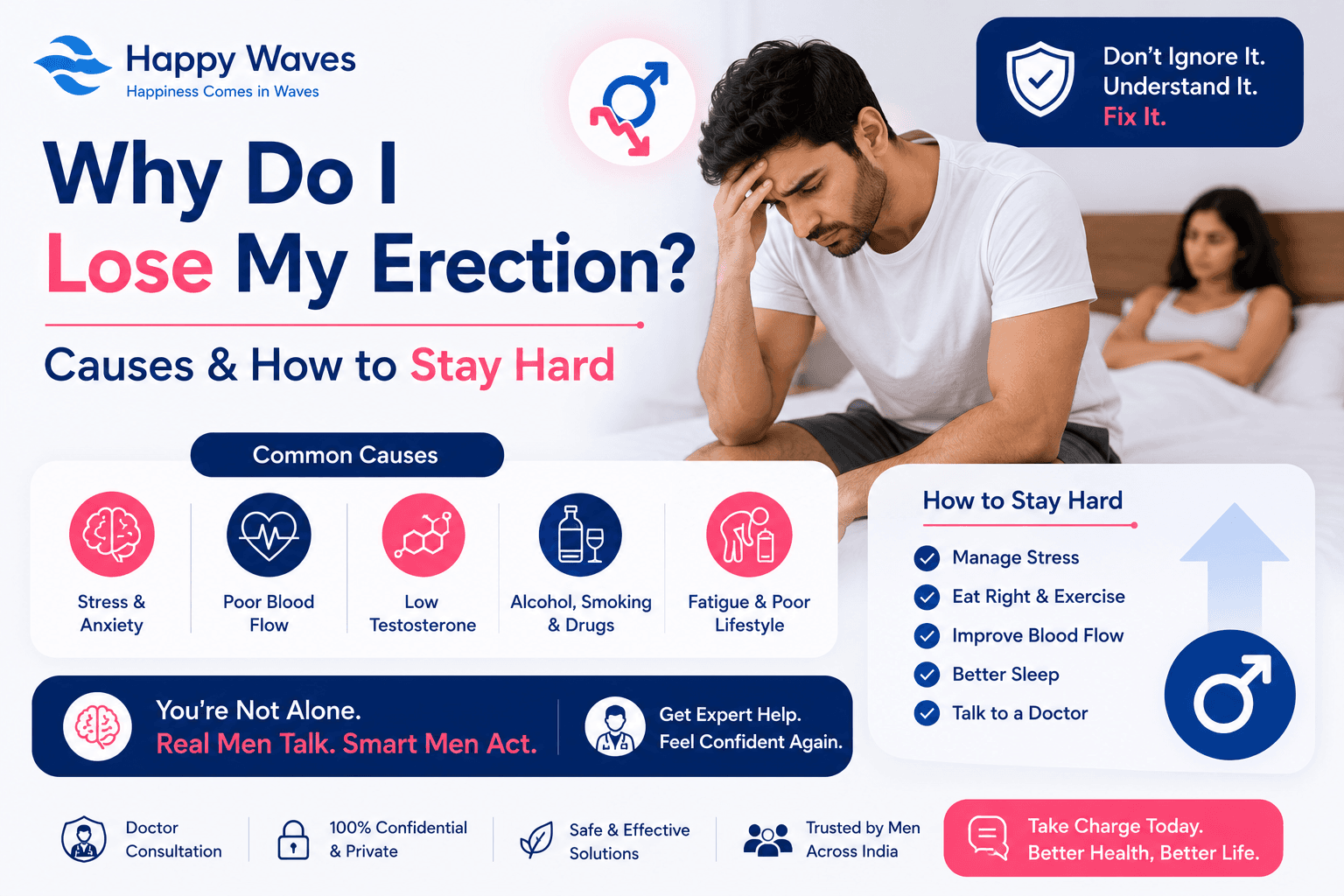
Losing an erection during sex or right before penetration, or the moment things get intense is one of the most frustrating experiences a man can have. And it's far more common than most men in India will ever openly admit.
Around 35% of men in India face sexual problems before the age of 40 and erectile difficulties are among the most commonly reported. More importantly, it is a treatable condition, usually caused by an underlying physical or psychological problem.
This guide covers every significant reason why erections are lost including specific scenarios like losing it right before penetration, when standing up, or when arousal gets too intense and what you can practically do about each one.
How Does an Erection Work?
Before exploring why erections are lost, it helps to understand how they happen because understanding the mechanism makes the causes much clearer.
Normal erections come from a balance between the nervous system, blood vessels, and hormones. When sexually aroused, the brain sends signals to the nerves in the penis, causing the release of neurotransmitters. These neurotransmitters relax the smooth muscle in the penile arteries allowing more blood to flow into the penis. The extra blood fills the erectile tissue, producing an erection.
This is a complex, coordinated process involving:
-
The brain arousal, desire, and emotional safety all begin here
-
The nervous system which carries signals from the brain to the penis
-
Blood vessels which must dilate adequately and maintain blood flow
-
Hormones particularly testosterone, which drives desire and supports the vascular response
-
Pelvic floor muscles which help maintain pressure within the erectile tissue
When any one of these systems is disrupted by anxiety, poor circulation, hormonal imbalance, nerve damage, or medication the erection can weaken or disappear entirely.
Does Losing an Erection Mean I Have Erectile Dysfunction?
Not necessarily and this distinction matters enormously.
You can lose your erection for many reasons, including stress, anxiety, or alcohol use. However, if you notice a pattern of repeatedly losing your erection, situational ED may be the cause. Some men think erectile dysfunction means your penis is always flaccid. In truth, ED can vary in severity and affect many parts of the sexual response cycle.
Loss of erection during the excitement phase is a sign of ED, but ED can also make you lose your erection midway through sex or prevent you from getting an erection in the first place. If you can't get an erection or can't keep one firm enough for sex, both are technically symptoms of erectile dysfunction if they happen regularly.
The key word is regularly. One isolated incident after a stressful day, too much alcohol, or a night of poor sleep is not erectile dysfunction. A consistent pattern that repeats across multiple attempts and causes distress is worth addressing with a specialist.
Why Do I Lose My Erection?
1. Performance Anxiety
Performance anxiety is by far the most prevalent cause of erection loss among men in India particularly younger men and those in new relationships.
Psychological factors such as stress, anxiety, and depression are among the most common causes of losing an erection during sex.
The mechanism is straightforward but vicious: you worry about losing your erection, that worry activates the sympathetic nervous system (the body's fight-or-flight response), and adrenaline released by this system constricts blood vessels in the penis directly undermining the very physiological process that produces an erection.
The more you focus on "staying hard" as a performance goal, the harder it becomes. This is why anxiety-driven erection loss creates a self-reinforcing cycle that worsens with every attempt.
Breaking this cycle requires addressing the psychological root not just the physical symptom. Sex therapy and sensate focus therapy are specifically designed for exactly this.
2. Why Do I Lose My Erection Right Before Penetration?
This specific scenario of getting fully erect during foreplay, then losing the erection at the moment of penetration is extremely common and almost always psychological in origin.
The transition from foreplay to penetration represents a shift in pressure. Suddenly, the moment of "performance" has arrived and for many men, that shift triggers anxiety that immediately deflates arousal.
Additional contributors to this specific pattern:
-
Fear of not satisfying your partner
-
Previous negative experience at the same moment creating anticipatory anxiety
-
Rushing from arousal to penetration without adequate transition
-
The physical act of reaching for a condom, changing positions, or pausing which interrupts the arousal state
What helps: Slowing the transition deliberately. Maintaining physical connection and stimulation during position changes. Communicating openly with your partner so neither feels pressure. And critically practising the techniques in sensate focus therapy that rebuild comfort with this specific transition.
3. Why Do I Lose My Erection When I Get Hot?
Some men notice that intense physical arousal when things become very passionate paradoxically causes erection loss. This seems counterintuitive but has a clear explanation.
When arousal becomes very intense, adrenaline production can spike particularly in men prone to anxiety. This adrenaline rush essentially the body's response to high emotional intensity constricts blood vessels and can cause the erection to weaken or disappear at the peak of excitement.
For other men, the "getting hot" refers to physical temperature becoming overheated during vigorous sex can redirect blood flow away from the penis as the body prioritises thermoregulation.
What helps: Building tolerance to high arousal states through gradual exposure which sensate focus therapy achieves naturally over time. Ensuring the environment isn't excessively hot. Staying well hydrated. And recognising that this response, however frustrating, is a nervous system response not a physical failure.
4. Why Do I Lose My Erection When I Stand Up?
Losing an erection when changing from a lying or sitting position to standing has a specific physical explanation and it's very common.
When you stand, gravity causes blood to pool in the lower extremities. In men with borderline cardiovascular health or mild vascular insufficiency, this positional blood shift can reduce the blood pressure in the penile arteries enough to weaken an erection.
This is actually an early vascular signal worth paying attention to. Low levels of testosterone, obesity, diabetes, and cardiovascular issues are among the most common physical contributors to erectile difficulties in Indian men.
What helps: This specific pattern warrants a cardiovascular and hormonal assessment of blood pressure, cholesterol, blood glucose, and testosterone to identify whether an underlying vascular issue is contributing. A Happy Waves sexologist can guide you through the appropriate investigations.
5. Cardiovascular Disease and Poor Blood Flow
The penis is a highly vascular organ. Its ability to achieve and maintain an erection depends entirely on healthy blood flow. This makes it, in many ways, a sensitive barometer of cardiovascular health.
ED is often a sign of a bigger problem that needs treatment. Common causes of ED include obesity, cardiovascular disease, and mental health issues.
Men with high blood pressure, high cholesterol, atherosclerosis (narrowed arteries), or a sedentary lifestyle with poor cardiovascular fitness are at significantly higher risk of erection loss because the vascular system cannot maintain adequate blood flow to sustain an erection under the demands of sexual activity.
Important: Erectile dysfunction that has a vascular basis can be an early warning sign of coronary artery disease sometimes appearing years before a cardiac event. This is a reason to take erection loss seriously as a health concern, not just a sexual one.
6. Low Testosterone
Testosterone is the primary hormonal driver of sexual desire and supports the vascular response to arousal. When testosterone levels fall below optimal whether due to aging, stress, obesity, poor sleep, or medical conditions, erections can become less reliable, weaker, and easier to lose.
Low testosterone levels can lead to erectile dysfunction, affecting sexual desire, mood, and energy. Testosterone treatment, when appropriately prescribed, may help to alleviate symptoms.
Testosterone naturally declines from the mid-30s in men but significant drops can occur much earlier due to chronic stress, inadequate sleep, and lifestyle factors. A simple blood test identifies testosterone levels, and treatment where appropriate can produce significant improvement.
7. Diabetes
Diabetes damages both blood vessels and nerves, the two systems most critical to erection. Diabetic neuropathy and vascular damage are among the most significant physical contributors to erectile dysfunction, with diabetic men up to three times more likely to experience ED than non-diabetic men.
In India, where diabetes prevalence is among the highest in the world, this connection is particularly clinically significant. Men with poorly controlled blood sugar consistently report worsening erectile function and improving glycaemic control often produces measurable improvement in erections.
8. Medications That Affect Erections
Several common medications have erection loss as a documented side effect and many men in India are unaware that their prescription is affecting their sexual function:
-
Antidepressants (particularly SSRIs) - Among the most common medication-related causes of ED
-
Blood pressure medications - Beta-blockers and thiazide diuretics in particular
-
Antihistamines - Can reduce blood flow and arousal
-
Prostate medications - 5-alpha reductase inhibitors affect testosterone metabolism
-
Anxiolytics (anti-anxiety medications) - Can dampen sexual response
Never stop prescribed medication without consulting your doctor. But if you believe medication is affecting your erections, a sexologist or your prescribing doctor can discuss alternatives.
9. Alcohol
Many men in India use alcohol to reduce sexual anxiety and while a small amount may reduce inhibitions, the overall effect of alcohol on erections is consistently negative.
Alcohol is a central nervous system depressant that reduces the sensitivity of nerve endings, impairs the vascular response, and suppresses testosterone. Heavy drinking over time causes chronic erectile difficulties that persist even when sober.
The cruel irony: many men drink to manage performance anxiety, which creates the very erection problems they were anxious about deepening both the anxiety and the dysfunction.
10. Relationship and Emotional Disconnection
Relationship problems including lack of communication, unresolved conflict, and emotional disconnection are recognised contributors to erection loss during sex.
The brain's limbic system which processes emotion and attachment is deeply involved in sexual arousal. When there is unresolved anger, emotional distance, or a sense of disconnection from a partner, the brain's arousal response is dampened at a neurological level. This is not a choice, it is physiology.
Men often notice erections that work reliably during masturbation but fail with a specific partner, a clear signal that the cause is relational or psychological rather than physical.
11. Sleep Deprivation and Chronic Fatigue
Testosterone production happens almost entirely during deep sleep. Men who consistently sleep fewer than 6 hours per night have measurably lower testosterone levels which directly affects erection quality and reliability.
Chronic fatigue whether from overwork, stress, or poor sleep hygiene depletes the physical energy and hormonal reserves that sustain reliable erections.
Loss of Erection During the Excitement Phase, Is It Always ED?
Loss of erection during the excitement phase is a sign of ED, but it's not always permanent or progressive. Many people believe the loss of erection during the excitement phase is always a sign of ED, but that's not always true. While occasional problems are normal, frequent episodes may signal an underlying health concern.
If you consistently lose your erection during the excitement phase before penetration, during foreplay, or at peak arousal a proper assessment by a qualified sexologist is the right step. This pattern, more than most, benefits from the integrated physical and psychological assessment that a sexologist provides.
How to Stay Hard During Sex
Behavioural Techniques
-
Reduce performance focus - Remove duration and "staying hard" as goals; focus entirely on sensation and connection with your partner
-
Extend foreplay deliberately - Rushing to penetration before adequate arousal is a common contributor to erection loss during the transition
-
Maintain physical connection during position changes - Don't completely stop touching; keep some stimulation going through transitions that often cause erections to weaken
-
Communicate openly with your partner - Shared understanding reduces pressure dramatically; a partner who understands what's happening can actively help rather than inadvertently worsen anxiety
Lifestyle Changes
-
Exercise daily - Cardiovascular fitness directly improves the blood flow that sustains erections; strength training boosts testosterone naturally
-
Improve sleep - 7–9 hours of quality sleep is a direct testosterone and erection health intervention
-
Stop smoking - Smoking damages penile blood vessels; even moderate smoking accelerates vascular erectile dysfunction
-
Reduce alcohol - Particularly if you drink before or during sexual activity
-
Manage blood sugar and blood pressure - If you have diabetes or hypertension, tight management of these conditions directly improves erection quality
Therapeutic Approaches
-
Sex therapy - Addresses the psychological root causes of anxiety-driven erection loss
-
Sensate focus therapy - Removes performance pressure entirely; rebuilds natural arousal responses
-
Cognitive behavioural therapy (CBT) - Directly targets the negative thought patterns that activate the anxiety-erection loss cycle
-
Couples therapy - When relationship dynamics are contributing, joint support accelerates resolution
Medical Options
When lifestyle and psychological approaches alone are not sufficient, medical options are highly effective:
-
PDE5 inhibitors (sildenafil, tadalafil) - Increase blood flow to the penis; highly effective for vascular and mixed-cause ED; must be prescribed by a doctor
-
Testosterone replacement therapy - For confirmed low testosterone; significantly improves erection quality
-
Hormonal assessment and management - Thyroid, prolactin, and other hormonal factors addressed where relevant
-
Medication review - Identifying and where possible changing medications that are contributing to erection loss
When to See a Specialist at Happy Waves
According to Dr. Chandra Shekar, a psychiatrist and sexual wellness specialist with over 32 years of experience at Happy Waves, the single most common mistake men make when dealing with erection loss is waiting hoping it will resolve on its own. The anxiety created by each failed attempt compounds the problem. Earlier intervention consistently produces faster, more complete recovery because the psychological layer hasn't had time to deepen.
See a Happy Waves sexologist if:
-
Erection loss is happening consistently not occasionally
-
It is causing significant anxiety, shame, or avoidance of intimacy
-
You are losing your erection specifically before penetration repeatedly
-
The pattern is affecting your relationship
-
You have health conditions like diabetes, hypertension, or obesity that may be contributing
-
Medications you are taking may be involved
-
You are under 40 and experiencing consistent erection loss a thorough assessment is particularly important in younger men
Our sexologists assess every dimension of physical health, hormonal status, vascular factors, psychological contributors, relationship dynamics, and lifestyle and build a personalized treatment plan that addresses the actual cause of your specific pattern.
We have specialists available across India in If you need a trusted sexologist in Delhi, an experienced sexologist in Mumbai, the best sexologist in Bangalore, a compassionate sexologist in Hyderabad, a dedicated sexologist in Kolkata, a qualified sexologist in Chennai, an expert sexologist in Pune, a caring sexologist in Jaipur, or a specialist sexologist in Kanpur Happy Waves has qualified specialists ready to help and online consultations from anywhere in India with same-week appointments.
Book a confidential ED consultation at happywaves.in →
Conclusion
Every man loses an erection at some point. It becomes a problem when it becomes a pattern and a bigger problem when the shame and avoidance that follow prevent a man from seeking the help that would genuinely resolve it.
If the cause is anxiety, vascular health, hormones, medication, relationship dynamics, or a combination there is always an identifiable reason and an effective treatment path. The men who recover fastest are the ones who seek help earliest.
At Happy Waves, our experienced sexologists provide comprehensive, confidential assessments for every type of erection concerned building personalised treatment plans that address the actual cause of your specific pattern.
Book Your Confidential Consultation
👉 Book an ED Consultation at happywaves.in
Online from anywhere in India. In-clinic in Delhi, Bangalore, Mumbai, Hyderabad, Kolkata, Chennai, Pune, Jaipur, Kanpur & Allahabad.
Same-week appointments. Male and female specialists. Complete confidentiality always.
Free Consultation
Concerned about your sexual health?
Speak to a certified sexologist — 100% confidential, no judgement. Same-day slots available.