Why Sex Hurts After Childbirth , Causes and What Helps
HappyWaves Team
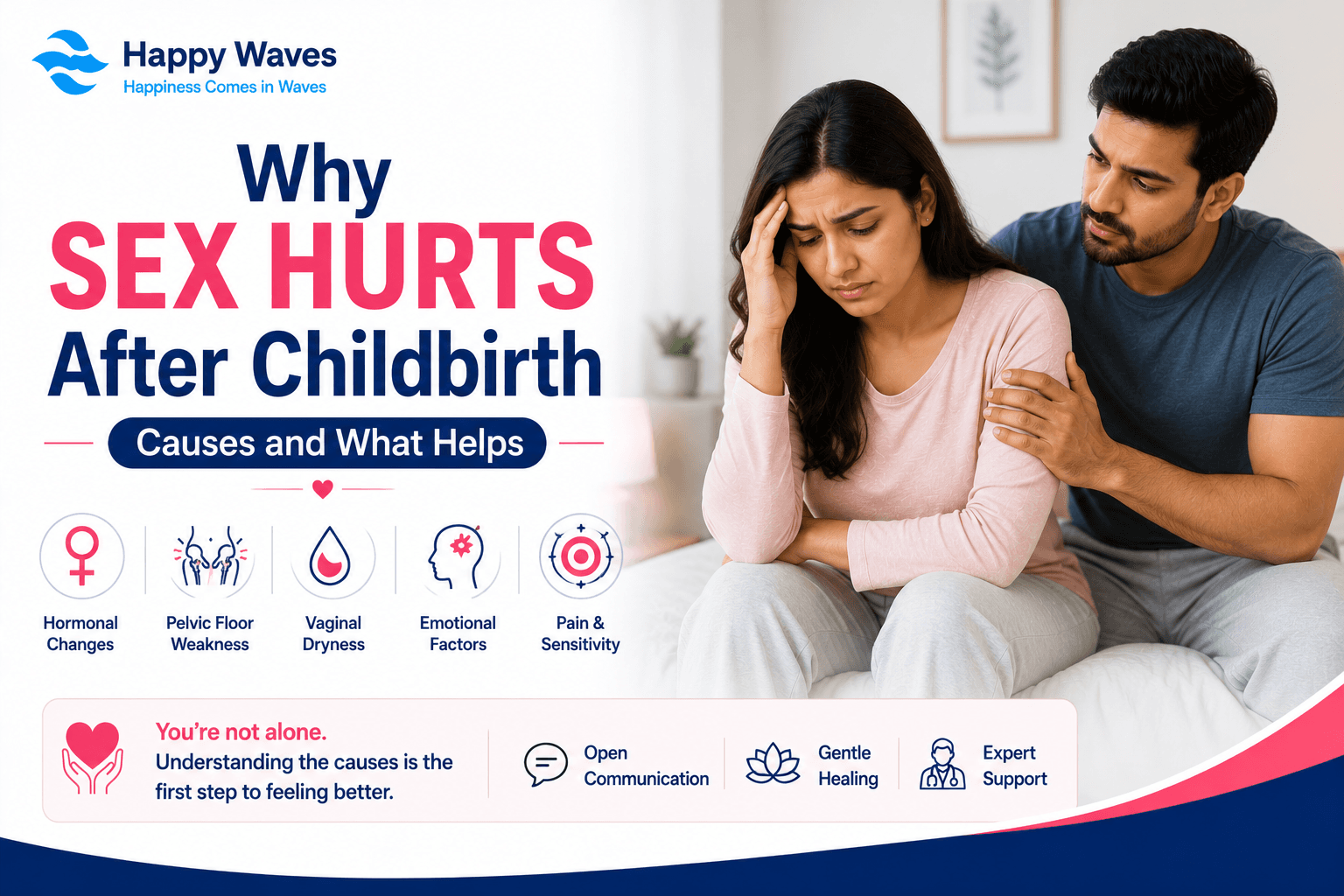
You've been given the six-week all-clear. Your doctor checked your tissues, nodded, and told you it was fine to resume sex. But when you try it hurts. Sometimes unbearably. And nobody really warned you this might happen, or what to do about it.
If this is where you are right now, please hear this first: you are not alone. This is not in your head. And this is not going to be permanent.
Approximately 41% of women reported painful sex three months after childbirth in research published on PubMed. About 50% of women have reported painful sex (dyspareunia) after giving birth and about 30–40% of women report experiencing painful sex 6 months after giving birth. While painful sex 6 months postpartum is common, it is not considered normal and can be treated.
That last sentence matters enormously: common and normal are not the same thing. The fact that so many women experience painful sex after birth does not mean you simply have to accept it, wait it out indefinitely, or stop wanting intimacy altogether.
Why Is Sex Painful After Birth?
To understand postpartum painful sex, it helps to first appreciate the sheer magnitude of what your body just did. Childbirth regardless of delivery type produces profound physical and hormonal changes. The question isn't really why some women experience pain; it's remarkable that anyone doesn't.
Your body goes through major physical and hormonal changes during pregnancy and delivery. Even after healing externally, internal tissue and pelvic muscles may still be recovering.
Causes of Painful Sex After Birth
1. Vaginal Tears and Episiotomy Stitches
One of the most common reasons for painful sex after childbirth is vaginal tears or an episiotomy. These tears can change a woman's vagina after giving birth, making sex uncomfortable until fully healed.
Perineal tears which occur in varying degrees of severity during vaginal delivery and episiotomies (surgical cuts made to widen the vaginal opening) both require healing time that varies widely between women. Even after the wound itself closes, scar tissue can remain sensitive, tight, and painful for months.
Having sex 3 weeks after giving birth with stitches - is this safe or advisable? Most medical guidelines recommend waiting at least 6 weeks before attempting penetrative sex after a vaginal delivery with tears or stitches and that's a minimum, not a target. While the risks of infection and bleeding decrease after the first two weeks postpartum, the birth experience can influence when moms feel physically ready to return to sex.
If you've attempted sex earlier than six weeks, or attempted it at six weeks and experienced pain at the site of stitches, this is completely expected and does not indicate something has gone wrong with healing. It simply means the tissue needs more time and possibly professional support.
2. Oestrogen Drop and Vaginal Dryness
This is the most physiologically significant cause for most postpartum women and the one least discussed during pregnancy.
One of the biggest causes of postpartum painful intercourse is postpartum vaginal dryness. After childbirth, oestrogen levels drop significantly. This drop is even more pronounced in women who are breastfeeding, because lactation actively suppresses oestrogen production meaning the dryness can persist for the entire duration of breastfeeding.
Without oestrogen, the vaginal walls thin, lose elasticity, and produce far less natural lubrication. Sex without adequate lubrication causes friction, tearing of delicate tissue, and significant burning pain. These changes affect both normal and caesarean births.
This is not a permanent state. Oestrogen levels and vaginal health return once breastfeeding reduces or ends. But for many new mothers particularly those exclusively breastfeeding for six months or more this dryness is the primary driver of painful sex postpartum throughout that entire period.
3. Pelvic Floor Dysfunction - Weakness and Tension
Here is something that surprises many women: the same condition pelvic floor dysfunction can produce painful sex in two completely opposite ways.
Painful intercourse after birth is frequently caused by a pelvic floor that is too tight, what's called a hypertonic pelvic floor. If your muscles can't fully relax on demand, they create resistance during penetration, and that causes pain.
This means that for many women, the standard postpartum advice to "do your Kegels" is actually counterproductive because their pelvic floor doesn't need to be stronger, it needs to be able to relax. Kegels alone are often the wrong tool for the job when it comes to painful sex. Painful intercourse after birth is frequently caused by a pelvic floor that is too tight.
Conversely, a weakened pelvic floor from childbirth can also reduce sexual sensation and comfort making sex unsatisfying and sometimes uncomfortable in a different way.
Pelvic floor physical therapy can help improve muscle flexibility, reduce tension, and support circulation and healing. Gentle stretching exercises, breathing techniques, and guided therapy often improve pain and confidence significantly over time.
This is one of the most important reasons why a proper postpartum assessment by a qualified sexologist rather than generic exercises produces the best outcomes.
4. Painful Sex After C-Section
Many women assume that because they had a Caesarean delivery, painful sex after birth shouldn't affect them. This is a common misconception. Painful sex after birth can happen to any new mother, regardless if you had a vaginal birth or via C-section.
Painful sex after C-section has several specific causes:
-
C-section scar tissue adhesions - Internal scar tissue from the uterine incision can create adhesions (internal scar bands) that pull or tug during penetration, causing deep pelvic pain
-
Oestrogen drop - Happens identically after C-section as after vaginal delivery; particularly significant if breastfeeding
-
Pelvic floor impact - The pelvic floor still bore the full weight of pregnancy for nine months; dysfunction can occur regardless of delivery type
-
Abdominal muscle healing - The C-section incision heals externally but internal layers of tissue continue healing for months; certain positions may be painful as a result
-
Psychological impact - The experience of major abdominal surgery, particularly if unplanned, can create anxiety and tension around physical intimacy
If your C-section scar is tender to touch, or you experience deep internal pain during sex several months postpartum, scar tissue is very likely involved and this is specifically addressable through specialist support.
5. Psychological Factors
Research has identified pain catastrophizing the tendency to view pain as threatening and uncontrollable as the single strongest predictor of persistent dyspareunia at 24 months postpartum. Stronger than any physical factor alone. That means the fear of sex after childbirth, the dread, the bracing, the anticipation of pain aren't just byproducts of the problem. They can become drivers of the problem.
This finding from research is genuinely important and it means that psychological support for postpartum painful sex is not a "soft" secondary concern. It is often the primary intervention needed for women whose pain persists past the point where physical healing should be complete.
Feeling "touched-out," meaning overstimulation from holding your baby or breastfeeding all the time, is also a very real contributor many women's bodies have been constantly physically occupied with their baby, and the idea of adding sexual touch to that load creates a psychological and sensory overwhelm that directly affects arousal, lubrication, and pelvic floor relaxation.
6. Postpartum Depression and Mental Health
Feeling very sad or low after childbirth can affect your interest and comfort during sex. This is called postpartum depression and is more serious than just feeling emotional. Getting help from a doctor is important.
Postpartum depression is far more common than most people realise affecting approximately 1 in 5 new mothers in India. It directly suppresses libido, reduces natural lubrication by affecting arousal, and creates the kind of emotional disconnection from your own body that makes intimacy feel difficult or impossible.
If you're experiencing persistent low mood, anxiety, tearfulness, or a complete absence of interest in sex alongside physical pain, postpartum depression deserves proper professional attention alongside any physical treatment for sexual pain.
7. Infections - Yeast, Bacterial Vaginosis, and UTIs
The postpartum period creates conditions where infections are more likely hormonal changes, physical healing, and the demands of caring for a newborn all affect immune resilience and vaginal flora.
After childbirth, infections like UTIs or vaginal infections can cause pain during sex. Signs include unusual discharge, itching, burning, or pain.
If your pain is accompanied by unusual discharge, strong odour, itching, or burning that persists between sexual encounters an infection is likely involved and needs to be tested and treated specifically. At Happy Waves, we provide discreet STI and infection screening as part of comprehensive women's sexual health care. Explore chlamydia and sexual infection testing →
8. Painful Sex 6 Months After Birth
Many women expect postpartum pain to resolve within a few weeks of the six-week check. When it doesn't when sex is still painful 6 months after birth they often assume this is simply how things are now.
It is not. In a 2018 study, almost 40% of women experienced painful sex 6 months after birth. But persistence does not mean permanence.
Painful sex at 6 months postpartum most commonly involves:
-
Persistent pelvic floor hypertonicity (tension that hasn't resolved without targeted treatment)
-
Ongoing oestrogen suppression from breastfeeding
-
Scar tissue that has become problematic rather than softening with time
-
Psychological factors including fear-avoidance patterns that have become entrenched
-
An underlying condition (like vaginismus that predated pregnancy and was exacerbated by birth)
At this point if you've been waiting and the pain hasn't resolved waiting longer is unlikely to help. This is when professional assessment makes the decisive difference.
What Helps - Everything That Actually Works for Painful Sex After Birth
Use Lubricant
This is the single most immediately impactful thing most postpartum women can do. Given that oestrogen-driven dryness is the most common physical cause of painful sex after birth, a high-quality, water-based or silicone-based lubricant addresses the primary mechanism of pain directly.
Use far more than you think you need. Apply it to both partners. Reapply if needed. This is not a sign that something is wrong with your arousal, it is an appropriate physiological accommodation to a hormonal state your body is temporarily in.
Give Yourself More Time for Arousal
Talk with your partner about doing something other than vaginal intercourse, such as massage, oral sex or mutual masturbation.
Extended, patient foreplay serves two purposes: it builds natural lubrication, and it allows the pelvic floor muscles to relax progressively rather than being confronted with penetration before they're ready. Rushing from no arousal to penetration is one of the most common patterns that makes postpartum pain worse.
Choose Positions That Give You Control
Positions where you are on top where you control the depth, angle, and pace of penetration consistently produce less pain than positions where your partner controls depth and timing. Side-lying positions are also gentler on scar tissue and pelvic floor tension. Let comfort rather than convention guide position choice.
Pelvic Floor Physiotherapy
Pelvic floor physical therapy is a conservative, first-line treatment that offers a comprehensive approach to managing dyspareunia after C-section and vaginal birth. Seeing a pelvic floor physical therapist for a postpartum assessment can be very beneficial for improving painful sex.
A pelvic floor physiotherapist can assess whether your pelvic floor needs strengthening, relaxation, or both and build a treatment plan around your actual needs rather than the assumption that all postpartum pelvic floors need the same thing.
Key techniques used in pelvic floor physiotherapy for postpartum pain:
-
Pelvic floor relaxation and down-training - For hypertonic (over-tight) pelvic floors; often more important than strengthening
-
Scar tissue mobilisation - Gentle massage of perineal or C-section scar tissue to reduce adhesions and sensitivity
-
Progressive vaginal desensitisation - Gradual, guided exposure that reduces the fear-pain cycle
-
Breathing and relaxation techniques - Paired with pelvic floor work to create the parasympathetic state needed for comfortable penetration
Topical Oestrogen
For women experiencing significant vaginal dryness from breastfeeding-related oestrogen suppression, topical (vaginal) oestrogen cream or pessaries deliver oestrogen locally to the vaginal tissue without significant systemic absorption making them generally compatible with continued breastfeeding. This should be discussed with and prescribed by a qualified doctor.
Sex Therapy and Psychological Support
Your emotional experience of pain matters just as much as the physical one. The most effective approach isn't about waiting or toughing it out, it's about building a recovery plan that addresses the full picture of what your body and mind went through.
For women where fear, body image concerns, postpartum depression, relationship tension, or the anxiety cycle around anticipated pain are significant contributors sex therapy and sensate focus therapy provide evidence-based tools to address these dimensions specifically.
Ayurvedic and Natural Support
Several approaches from India's Ayurvedic tradition may support postpartum recovery alongside conventional treatment:
-
Shatavari -The primary Ayurvedic herb for women's reproductive health; traditionally used to support hormonal recovery postpartum, improve natural lubrication, and reduce pelvic inflammation
-
Ashwagandha -Reduces cortisol and pelvic floor tension driven by new-parent stress and anxiety
-
Warm sesame oil massage - A traditional Abhyanga postpartum practice that promotes circulation, reduces inflammation, and supports tissue recovery
-
Yoga for pelvic floor relaxation - Gentle postpartum yoga focusing on Supta Baddha Konasana (reclined bound angle) and other hip-opening postures that promote pelvic floor release
Always consult a qualified Ayurvedic practitioner before beginning any herbal protocol postpartum particularly if breastfeeding.
Communicate Openly With Your Partner
This is consistently underrated in recovery from postpartum painful sex. Many women try to push through pain to avoid disappointing their partner or because they feel guilty about the loss of intimacy. This almost always makes things worse.
Your partner needs to understand what is happening physiologically and emotionally and needs to be an active participant in creating the slow, gentle, low-pressure conditions that allow recovery to happen. An honest conversation outside the bedroom, at a neutral moment, is often the most important single intervention available. Explore relationship counselling at Happy Waves →
When to Seek Sexologist Help for Painful Sex After Birth
Seek sexologist doctor support if:
-
Pain during sex has persisted beyond 3 months despite lubricant and lifestyle adjustments
-
You are experiencing painful sex 6 months after birth with no improvement
-
The pain is severe not just discomfort but genuine, significant pain
-
You notice pain specifically at or near a scar (perineal tear, episiotomy, or C-section)
-
You've tried to return to sex multiple times and find penetration impossible this may indicate postpartum vaginismus
-
Postpartum depression or significant anxiety is affecting your relationship or wellbeing
-
Your partner is affected and the relationship is strained by the extended period without intimacy
Some discomfort after childbirth is normal, but ongoing or severe pain during sex is not. See a doctor if you have pain that does not go away even after trying home treatments.
According to Dr. Shakeeba Naaz, a sexologist at Happy Waves Mumbai with over 12 years of experience in women's sexual health, postpartum painful sex is one of the most consistently undertreated women's health concerns she encounters not because it's difficult to treat, but because women are so rarely told that effective treatment exists. Most cases, she notes, respond very well once the specific underlying cause is properly identified and addressed.
Looking for a Sexologist Near Me for Postpartum Sexual Pain?
If you've been searching "sexologist near me" or lying awake wondering whether anyone can actually help with this, Happy Waves provides exactly the compassionate, expert, confidential care that postpartum women deserve.
If you want a sexologist doctor online consultation from the privacy and comfort of your own home (particularly practical with a new baby), are looking for a sexologist near me for female sexual health concerns specifically, want an ayurvedic sexologist near me for a more natural, holistic approach to postpartum recovery, or your partner is searching for sexologist doctors for male near me to understand how to support you through this Happy Waves brings integrated expertise and complete confidentiality to all of it.
Our Sexologists Across India
Happy Waves is not just a local clinic, we are India's most trusted sexual health platform serving patients across 35+ cities with verified specialist doctors, complete online consultations, and 100% confidential care available everywhere. No matter which city you are in, expert sexual health support is just one click away.
Find a verified sexologist in your city: Sexologist in Delhi , Sexologist in Mumbai , Sexologist in Bangalore, Sexologist in Kolkata, Sexologist in Hyderabad, Sexologist in Chennai, Sexologist in Pune, Sexologist in Ahmedabad, Sexologist in Surat, Sexologist in Jaipur, Sexologist in Lucknow, Sexologist in Chandigarh, Sexologist in Noida, Sexologist in Gurgaon, Sexologist in Indore, Sexologist in Bhopal, Sexologist in Nagpur, Sexologist in Thane, Sexologist in Agra, Sexologist in Meerut, Sexologist in Varanasi, Sexologist in Kota, Sexologist in Udaipur, Sexologist in Patna, Sexologist in Ranchi, Sexologist in Jharkhand, Sexologist in Bihar, Sexologist in Guwahati, Sexologist in Jorhat, Sexologist in Baramulla, Sexologist in Udaipur and Sexologist in Kanyakumari
Not sure which city page applies to you? Book an online consultation → and our doctors will reach you wherever you are in India. No travel required, no waiting room, complete privacy guaranteed.
Conclusion
Healing is absolutely possible. Half of new mothers experience painful sex after childbirth and most of them suffer in silence, either waiting for it to resolve on its own or assuming that intimacy simply changes irrevocably after having a baby.
Neither of those things has to be true for you. The causes of postpartum painful sex are understood. The treatments are effective. The specialists exist. And the only thing standing between you and comfortable, satisfying intimacy is the decision to stop waiting and seek proper support.
👉 Book a confidential postpartum sexual health consultation at happywaves.in →
Free Consultation
Concerned about your sexual health?
Speak to a certified sexologist — 100% confidential, no judgement. Same-day slots available.