Sexual Anxiety in Marriage - What Causes It, How It Feels, and What Actually Helps
HappyWaves Team
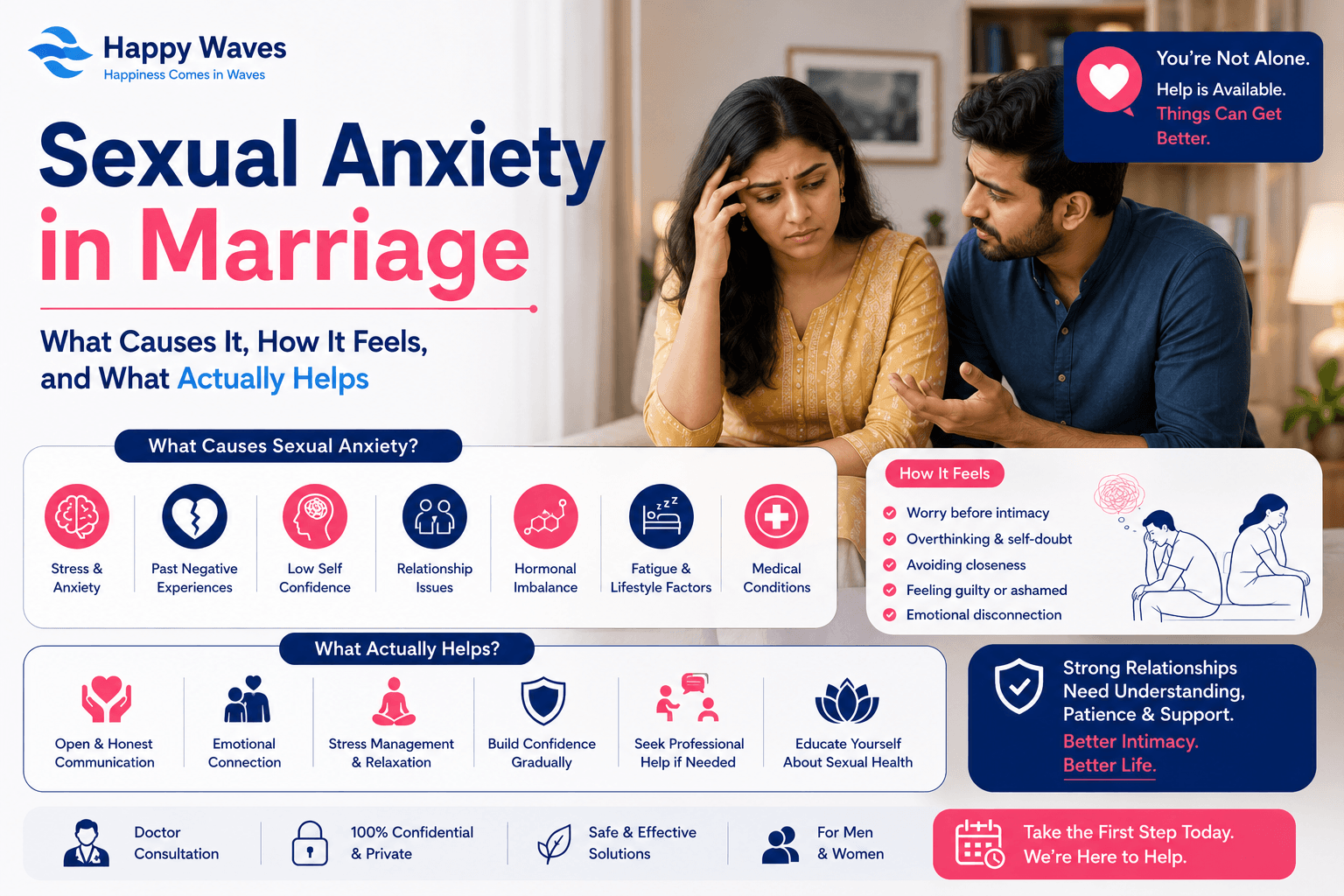
There's a particular kind of loneliness that comes with sexual anxiety in marriage. You love your partner. You want to be close to them. But the moment intimacy becomes possible or expected something shifts. Your mind races. Your body tenses. The desire is there, but the ease is not. And you lie awake afterwards wondering what is wrong with you, why it's so difficult, and whether anyone else feels this way. The answer is yes, far more people than you'd imagine.
Sexual anxiety in marriage is one of the most common and least discussed concerns our specialists encounter at Happy Waves. It affects men and women of all ages, across all relationship stages from newly married couples navigating intimacy for the first time, to couples who have been together for years and find that anxiety has quietly crept into their bed.
This guide explains what sexual anxiety actually is, why it develops so commonly in Indian marriages specifically, how it affects both partners, and most importantly what actually helps.
What Is Sexual Anxiety?
Sexual anxiety is a pattern of persistent worry, fear, or nervousness specifically around sexual activity or intimacy. It is not simply shyness or occasional nerves, it is a recurring anxiety response that interferes with a person's ability to engage comfortably and enjoyably in sexual activity.
Featured Snippet Definition:
Sexual anxiety is a form of anxiety specifically triggered by sexual situations including anticipating sex, initiating intimacy, or engaging in sexual activity. It can manifest as fear of performance, fear of judgment, avoidance of intimacy, or physical symptoms like muscle tension and difficulty with arousal. It affects both men and women and is highly treatable with the right support.
Sex anxiety is not the same as low sexual desire though the two often co-occur. A person with sexual anxiety may have perfectly healthy desires but find that anxiety interferes with their ability to act on it or enjoy it.
It exists on a spectrum:
-
Mild - Occasional nervousness before sex that passes once intimacy begins
-
Moderate - Consistent worry about sexual performance or judgment that reduces enjoyment
-
Severe - Significant avoidance of all sexual situations; intimacy triggers a fear or panic response
All levels of sexual anxiety are worth addressing because even mild, persistent sex anxiety wears on relationships and self-esteem over time.
Why Is Sexual Anxiety So Common in Indian Marriages?
India has a unique cultural context that makes sexual anxiety in marriage particularly prevalent and particularly difficult to acknowledge.
Research has found that the tabooed nature of sex in India especially before marriage is considered bad and unacceptable for many, creating higher negative sexual cognition and sexual anxiety that persists into marriage.
Several distinctly Indian factors contribute:
No sexual education before marriage
Most Indian men and women enter marriage with little or no accurate information about sexual health, sexual response, or what intimacy actually involves. Expectations built from films, peers collide with reality and anxiety fills the gap.
Cultural and family pressure around first-night performance
In India, enormous cultural significance is placed on the wedding night creating performance pressure that would overwhelm anyone. For many couples, this first experience of anxiety around sex sets a pattern that can persist for years.
Shame rooted in upbringing
Growing up in households where sex was never discussed or was discussed only in terms of danger or impropriety creates deep associations between sexuality and shame. These associations don't disappear on the wedding day. They continue into the marriage.
Joint family living
Lack of physical privacy in joint family homes creates constant low-level anxiety around intimacy, the fear of being heard, interrupted, or judged by family members sharing the home.
Gender-specific pressures
Men carry enormous pressure to perform, to initiate, to maintain erections, to satisfy their partner. Women often carry a different burden of not knowing what to want, not feeling permitted to want it, or feeling that their own pleasure is secondary or inappropriate to express.
Research has confirmed that a major difference exists in the mental health impact of sexual anxiety between males and females with females found to be more vulnerable to poor mental health outcomes related to sexual cognition and anxiety.
What Does Sexual Anxiety Feel Like?
Sexual anxiety presents differently in different people which is one reason it often goes unrecognised for what it is.
In men, sexual anxiety commonly looks like:
-
Losing an erection at the moment of penetration or when arousal peaks
-
Ejaculating much sooner than desired driven by rushing to "get it over with" before anxiety overwhelms the experience
-
Avoiding initiating sex to protect themselves from potential failure
-
Being physically present during sex but mentally elsewhere monitoring performance rather than experiencing pleasure
-
A creeping dread before anticipated sexual situations
In women, sexual anxiety commonly looks like:
-
Difficulty relaxing into arousal a mind that keeps intruding on physical experience
-
Tension in the pelvic floor that makes penetration uncomfortable or impossible often associated with vaginismus
-
Avoiding intimacy finding reasons to stay up late, go to sleep early, or create distance
-
Being physically present during sex but feeling disconnected going through the motions without genuine engagement
-
Fear of judgment about body, sounds, responses, or the "right" way to behave
In both partners:
-
Anticipatory dread before expected sexual occasions (anniversaries, vacations, weekends)
-
Relief when sex doesn't happen followed by guilt about that relief
-
Difficulty communicating about the anxiety to their partner
-
A slow, quiet erosion of emotional intimacy as physical avoidance increases
When sexual anxiety is left unresolved, fear of failure may preclude future attempts frequently resulting in a vicious cycle of performance anxiety, often with the cessation of all sexual activity and increased emotional distancing within the relationship.
What Causes Sexual Anxiety in Marriage?
All the Contributing Factors
Sexual anxiety in marriage is almost never caused by one single thing. It is typically the accumulation of multiple factors working together.
Performance Pressure and Fear of Failure
For men, the most common driver is fear of not performing adequately, not maintaining an erection, ejaculating too soon, or not satisfying their partner. The men might be under a significant amount of stress, which affects their ability to achieve an erection and when this happens repeatedly, a vicious cycle of sexual performance anxiety develops, often leading to the cessation of all sexual activity.
For women, performance pressure takes a different form: the pressure to appear enthusiastic, to orgasm, to look or sound "right," or to not disappoint their partner.
Painful or Difficult Early Sexual Experiences
If the first sexual experiences in a marriage were painful, awkward, or emotionally difficult the nervous system learns to associate intimacy with discomfort or threat. This association persists unless it is actively addressed.
For many women in India, the first experience of sex is painful often due to vaginismus or insufficient foreplay and that pain creates an anticipatory fear of future pain that sustains sexual anxiety long after the physical cause has been addressed.
Unresolved Relationship Conflict
Emotional safety is the foundation of comfortable sexual intimacy. When there is unresolved anger, criticism, emotional withdrawal, or a sense of disconnection between partners the body and mind cannot relax into intimacy. Sexual anxiety in marriage is very often a symptom of relationship dynamics that need attention.
Body Image and Self-Consciousness
Negative body image, feeling unattractive, ashamed of physical appearance, or self-consciousness during sex is a significant driver of sexual anxiety in both men and women. When the mind is occupied with monitoring and judging the body rather than experiencing pleasure, arousal suffers and anxiety increases.
Past Trauma
Sexual trauma whether assault, coercive experiences, or significantly negative sexual encounters can create deep anxiety responses around intimacy that persist long after the events themselves. Trauma-informed therapeutic support is a critical part of addressing this specific cause.
Anxiety as a General Mental Health Condition
People with generalised anxiety disorder, social anxiety, or obsessive-compulsive tendencies are significantly more likely to experience sexual anxiety because the anxious mind brings its characteristic patterns of worry and monitoring into the bedroom along with everything else.
How Sexual Anxiety Affects Both Partners
Sexual anxiety in marriage does not stay contained to the individual experiencing it. It spreads quietly, gradually into the relationship.
The partner of someone with sexual anxiety often interprets avoidance as rejection. They may feel unwanted, unattractive, or confused about why intimacy has become so infrequent or strained. They begin to approach sex with hesitation not wanting to pressure their partner, but also carrying their own hurt about the distance.
This creates a painful dynamic: one partner anxious about sex, one partner afraid to initiate, and both carrying unspoken feelings that never get addressed because neither knows how to start that conversation.
Sexual avoidance in marriage is not just about lack of desire. It is often connected to anxiety, emotional pain, stress, past hurt, or feeling unsafe in the relationship. Sexual avoidance does not mean a marriage is broken, it usually means something deeper needs attention.
The good news: couples who address sexual anxiety together through open communication and professional support almost always report that the process deepens their emotional intimacy, not just their physical connection.
What Actually Helps Evidence-Based Treatments for Sexual Anxiety
Sex Therapy
Sex therapy directly addresses the psychological roots of sexual anxiety, the beliefs, thought patterns, past experiences, and relationship dynamics that sustain it.
A qualified sex therapist helps couples and individuals:
-
Identify the specific thoughts and triggers that activate anxiety during sexual situations
-
Replace performance-focused approaches to sex with pleasure-and-connection-focused ones
-
Develop communication skills that make these conversations manageable between partners
-
Process past experiences that are contributing to current anxiety
-
Rebuild positive associations with intimacy through graduated, structured exposure
Sex therapy is entirely talk-based, no physical examination, no sexual activity in sessions. It is a professional, confidential, medical consultation about sexual wellbeing.
Sensate Focus Therapy
Sensate focus therapy was specifically developed to address performance anxiety in sexual relationships. By replacing goal-oriented sex with gradual, non-pressured, curiosity-driven touch it removes the performance expectation that generates anxiety.
The results are often profound. When the pressure to "perform" is taken off the table entirely, the nervous system relaxes, natural arousal returns, and couples rediscover a quality of connected intimacy they may not have experienced before.
Cognitive Behavioural Therapy (CBT) for Sex Anxiety
CBT identifies and challenges the specific negative thoughts that fuel sexual anxiety "I'm going to fail," "They'll be disappointed," "Something is wrong with me" and replaces them with more accurate, helpful frameworks.
Research consistently shows CBT to be effective for sexual anxiety both as a standalone approach and integrated within broader sex therapy.
Couples Communication Coaching
Many cases of sexual anxiety in marriage improve dramatically when both partners simply learn to talk about it honestly. This sounds straightforward but is genuinely difficult without a structured, supported environment.
At Happy Waves, our sexologists work with couples to develop the communication skills that make these conversations possible and productive. Explore relationship counselling at Happy Waves →
Addressing the Physical Dimension
For men whose sexual anxiety has produced erectile dysfunction or premature ejaculation, addressing the physical symptom alongside the psychological cause consistently produces faster improvement.
For women whose anxiety has produced vaginismus or painful intercourse pelvic floor physiotherapy and graduated desensitisation work alongside psychological support to address both dimensions simultaneously.
Mindfulness Practices
Mindfulness the practice of bringing non-judgmental, present-moment awareness to experience directly counteracts the anxious self-monitoring that disrupts sexual experience.
Daily mindfulness practice (even 10 minutes) reduces overall anxiety levels. Applied specifically during intimacy focusing on sensation rather than performance, on present experience rather than anticipated outcome it significantly improves both arousal and enjoyment over time.
What You Can Start Doing Today
While professional support produces the most complete results, here are meaningful steps you can begin right now:
-
Name it - Simply acknowledging "I experience sexual anxiety" to yourself and ideally to your partner is the most important first step. You cannot address what you haven't acknowledged
-
Remove the performance goal - Agree with your partner that for a defined period, penetration and orgasm are taken off the agenda. Focus only on physical closeness, warmth, and gentle touch with no expectation of where it leads
-
Breathe deliberately during intimacy - Slow, deep breathing during sexual situations activates the parasympathetic nervous system and directly reduces anxiety in the moment
-
Talk to your partner outside the bedroom - Choose a calm, non-sexual moment to share what you've been experiencing. Most partners, when given the chance to understand, respond with compassion rather than judgment
-
Seek professional support - Sexual anxiety responds very well to professional treatment. The sooner you seek help, the less entrenched the patterns become
When to See a Sexologist at Happy Waves
According to Dr. Nitin Parikh, a psychiatrist and sexologist at Happy Waves, sexual anxiety in Indian marriages is among the most underdiagnosed and undertreated conditions in sexual health precisely because the cultural environment makes it so difficult to acknowledge. Many couples spend years navigating around the anxiety rather than addressing it and the relief they experience when they finally do is often immediate and significant.
Consider consulting a Happy Waves specialist if:
-
Sexual anxiety has been present for three months or more
-
You or your partner are consistently avoiding intimacy
-
Physical symptoms erection loss, premature ejaculation, vaginismus, or painful intercourse have developed alongside anxiety
-
The anxiety is creating emotional distance in your marriage
-
You are newly married and intimacy has not yet been possible
-
Previous attempts to address this on your own have not produced improvement
Our sexologists are available across India If you need sexologist in Delhi, an experienced sexologist in Mumbai, the best sexologist in Bangalore, a compassionate sexologist in Hyderabad, a dedicated sexologist in Kolkata, a qualified sexologist in Chennai, an expert sexologist in Pune, a caring sexologist in Jaipur, or a specialist sexologist in Kanpur Happy Waves has qualified specialists ready to help in every city across India.
Book a confidential consultation at happywaves.in →
Conclusion
Sexual anxiety in marriage is painful. It creates distance where you want closeness, silence where you need honesty, and shame where there should be none. But it is not permanent. It is not a sign that your marriage is broken or that intimacy is beyond you.
It is a pattern with identifiable causes and proven solutions. And the couples who address it together consistently discover not just a return to comfortable intimacy, but a depth of connection that the anxiety, in its own way, ultimately made possible.
At Happy Waves, we create exactly the space needed for that work professional, confidential, compassionate, and built on genuine clinical expertise.
Book Your Confidential Consultation
👉 Book a Sexual Health Consultation at happywaves.in
Online from anywhere in India. In-clinic in Delhi, Bangalore, Mumbai, Hyderabad, Kolkata, Chennai, Pune, Jaipur, Kanpur & Allahabad.
Individual and couples sessions available. Same-week appointments. Complete confidentiality always.
Free Consultation
Concerned about your sexual health?
Speak to a certified sexologist — 100% confidential, no judgement. Same-day slots available.